

Agile digital transformation of a public service.
THE GOVERNMENT OF ALBERTA
2025
The Jobs, Economy, Trade and Immigration (JETI) Ministry within the Government Of Alberta (GoA) delivers labour market training programs to assist job ready Albertans obtain employment. Each approved case is managed by government employees in a software called Mobius.
TENET 1.0 (pictured above) is set to replace an end-of-life software, Mobius. Mobius is a costly legacy software that relies on complex navigation, fragmented workflows, and manual workarounds, leading to data integrity issues and slow processes. Government programming deserves modern tech, secure systems and easy to use software.
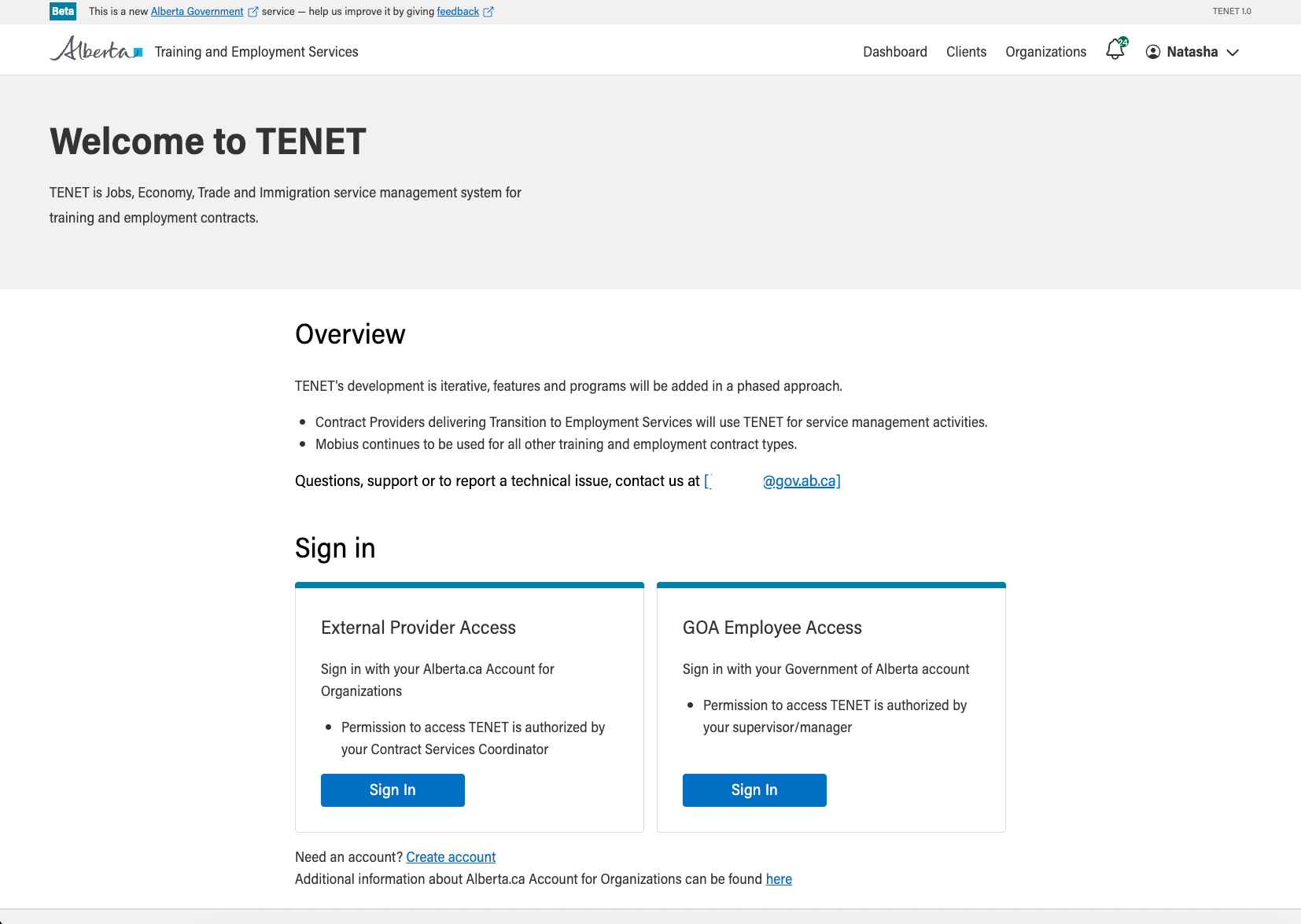
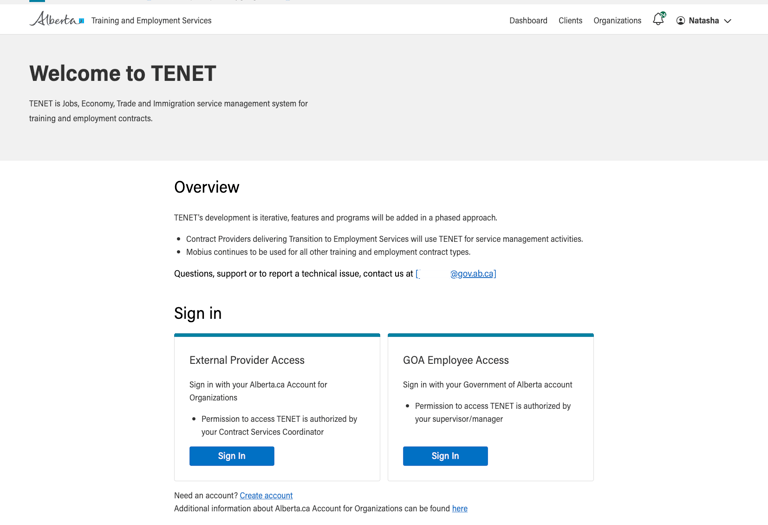
Our small, highly autonomous team led the end-to-end redesign, applying service design principles, co-designing with users, aligning stakeholders, and delivering an accessible, WCAG 2.1–compliant B2B SaaS.
I owned the front-end experience of TENET, and was accountable for UX and UI quality across the product. Our team included service design, product, architecture, delivery, engineering, and QA.
Coming in as a new team member during the first release, I got thrown in to dual-track agile.
In addition to our scrum ceremonies, I set up regular meets with the Service Designer to make sure we were aligned and had to space to openly ask for support from each other.
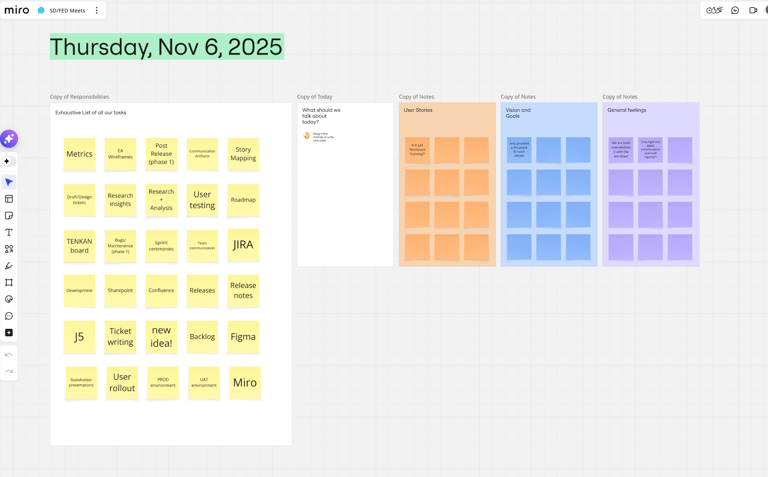
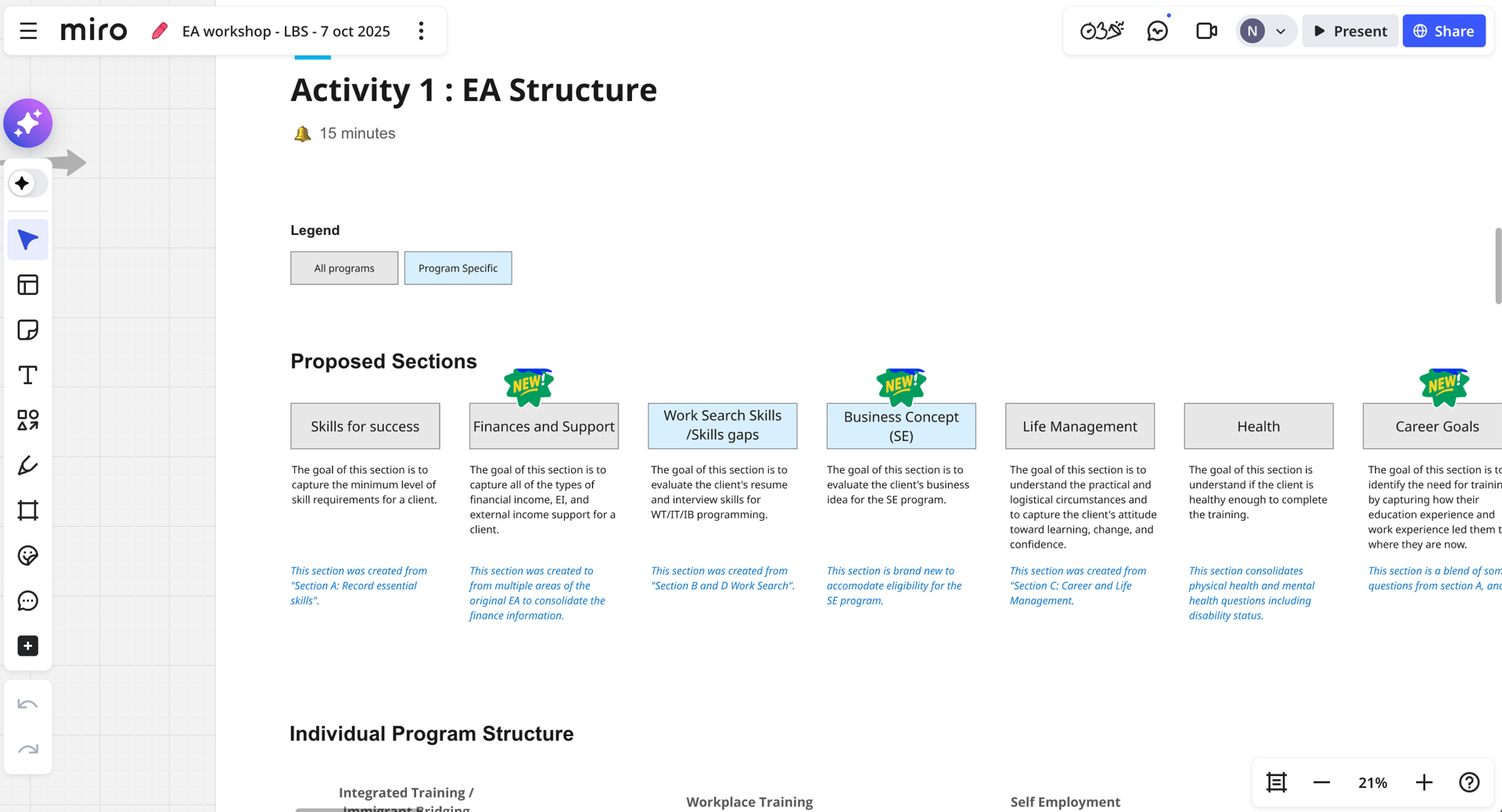
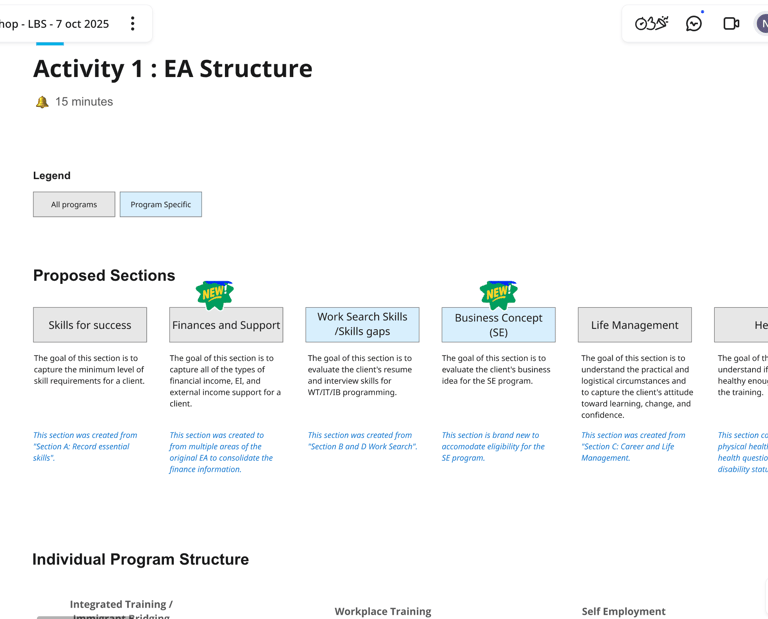
Check in boards in Miro.
Before digging in too deep, I got to know the team, learned their roles, contributions and language. I value the design and dev experience as much as the user experience, because I want us to work well together.

During the discovery phase with the Service Designer, we continuously iterated the scope in order to satisfy stakeholders, users and the release schedule.
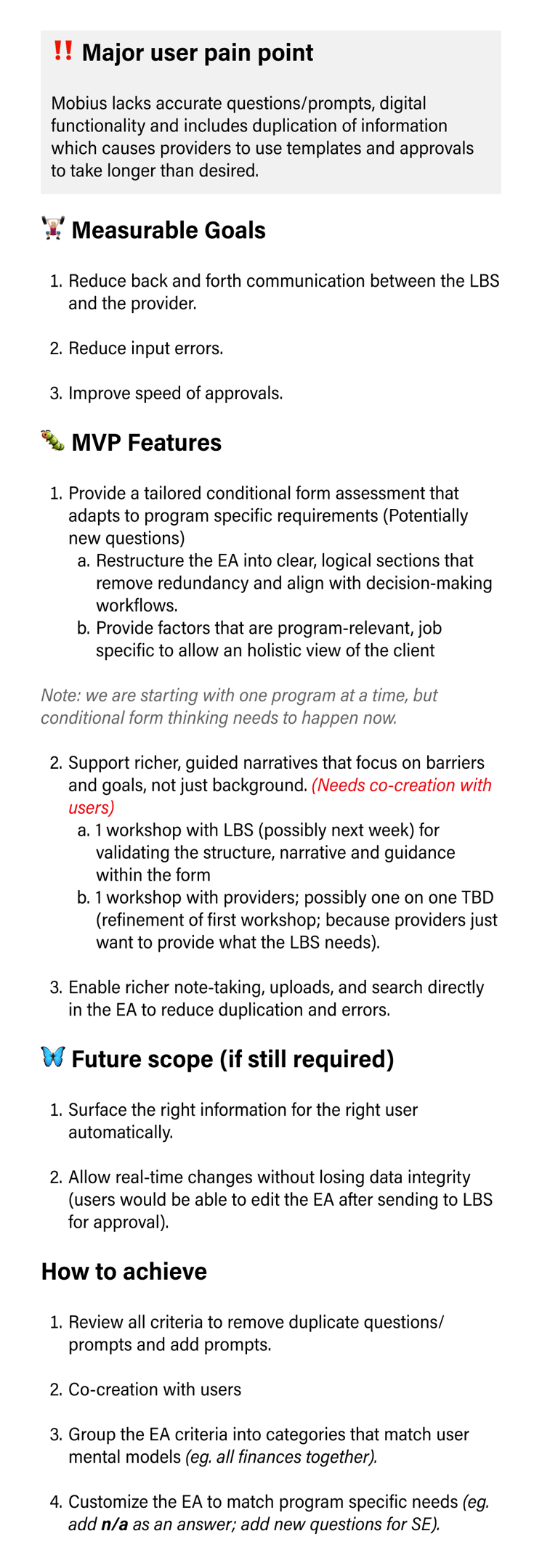
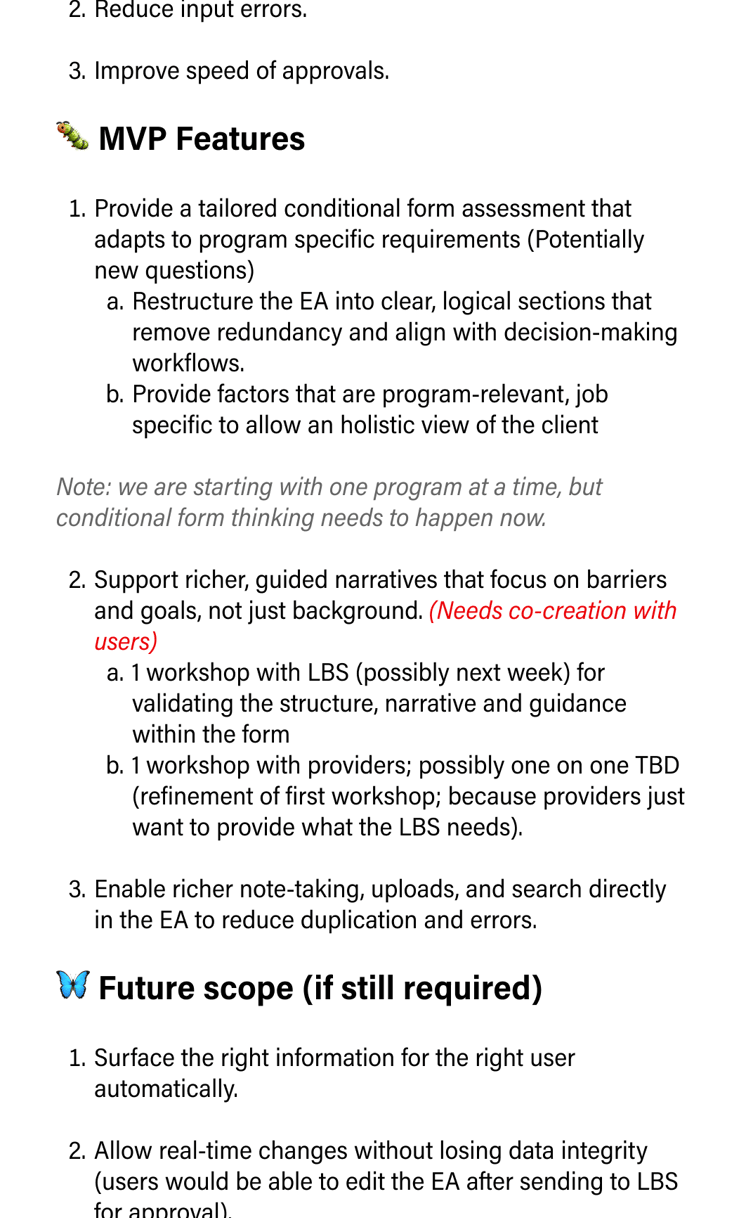
While working on maintenance and bug fixes with the engineers I noticed a lot of back and forth between design and development that was slowing progress 🐌
Alongside this bottleneck, the first iteration of the interface was not responsive, spacing was inconsistent with Figma designs and there was a lack of documentation on project objectives, strategy and direction. This could easily lead to team misalignment and low velocity sprints.
In the first 6 months, I streamlined handoff, defined a clear release scope, and advocated for higher quality standards.
The priority was to stay on schedule without sacrificing a quality product. Because the complexity of the software and user needs, this project could easily go on for years. Being in a government environment also meant that spontaneous requests from our minister would change our plans such as a policy name change that affected a lot of copy. We had to account for such changes.

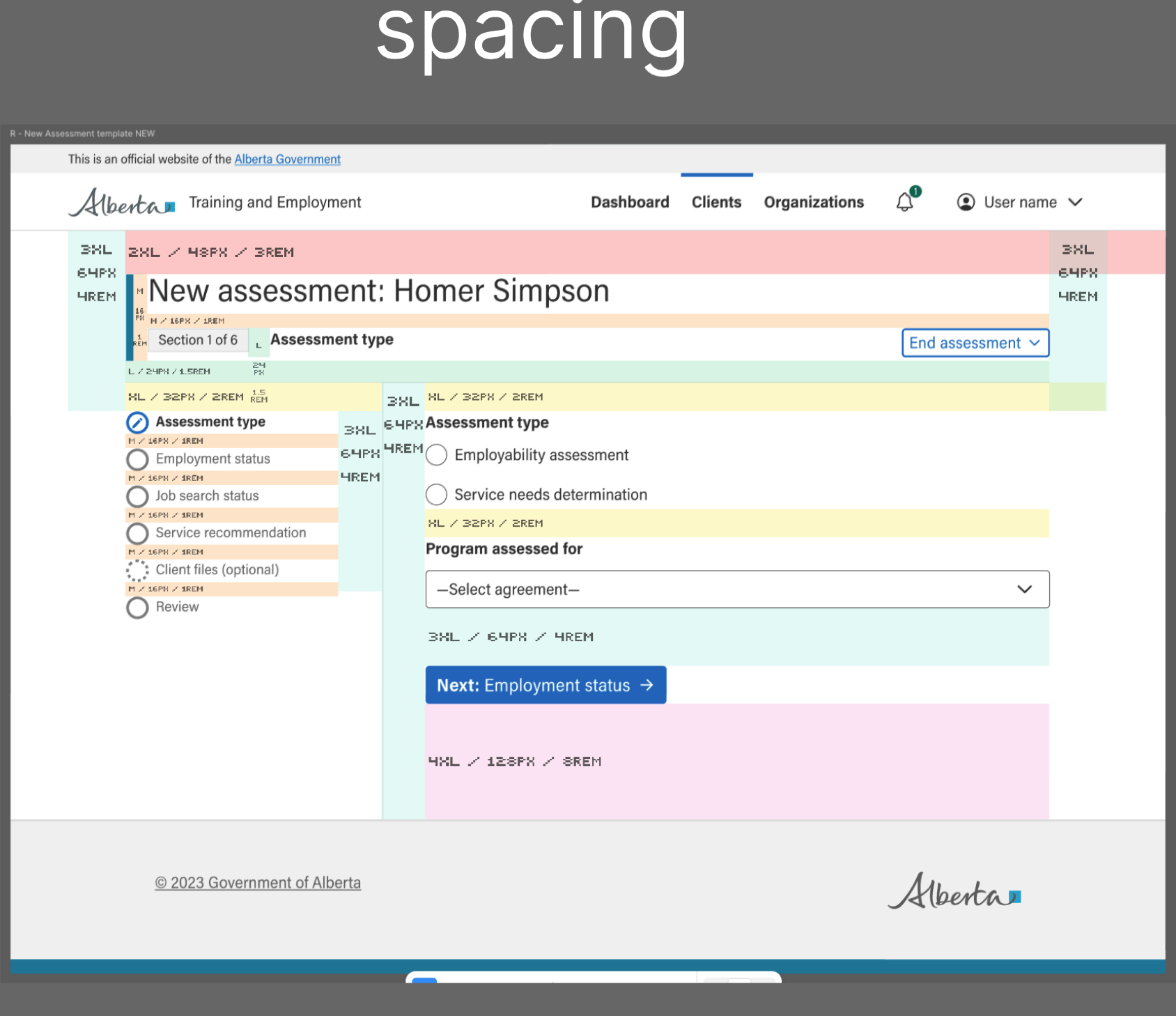
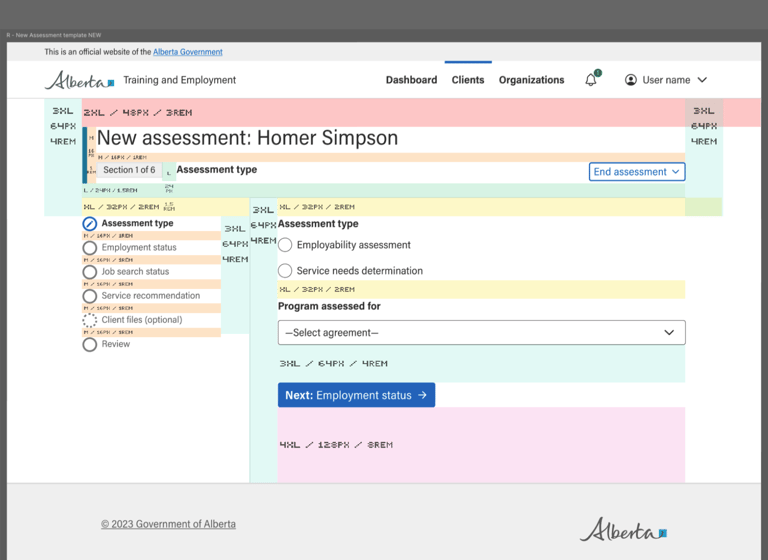
I changed the way we added spacing so the developers could grab the measurements quicker.
Devs could easily find what they were looking for with highly organized and annotated Figma files.
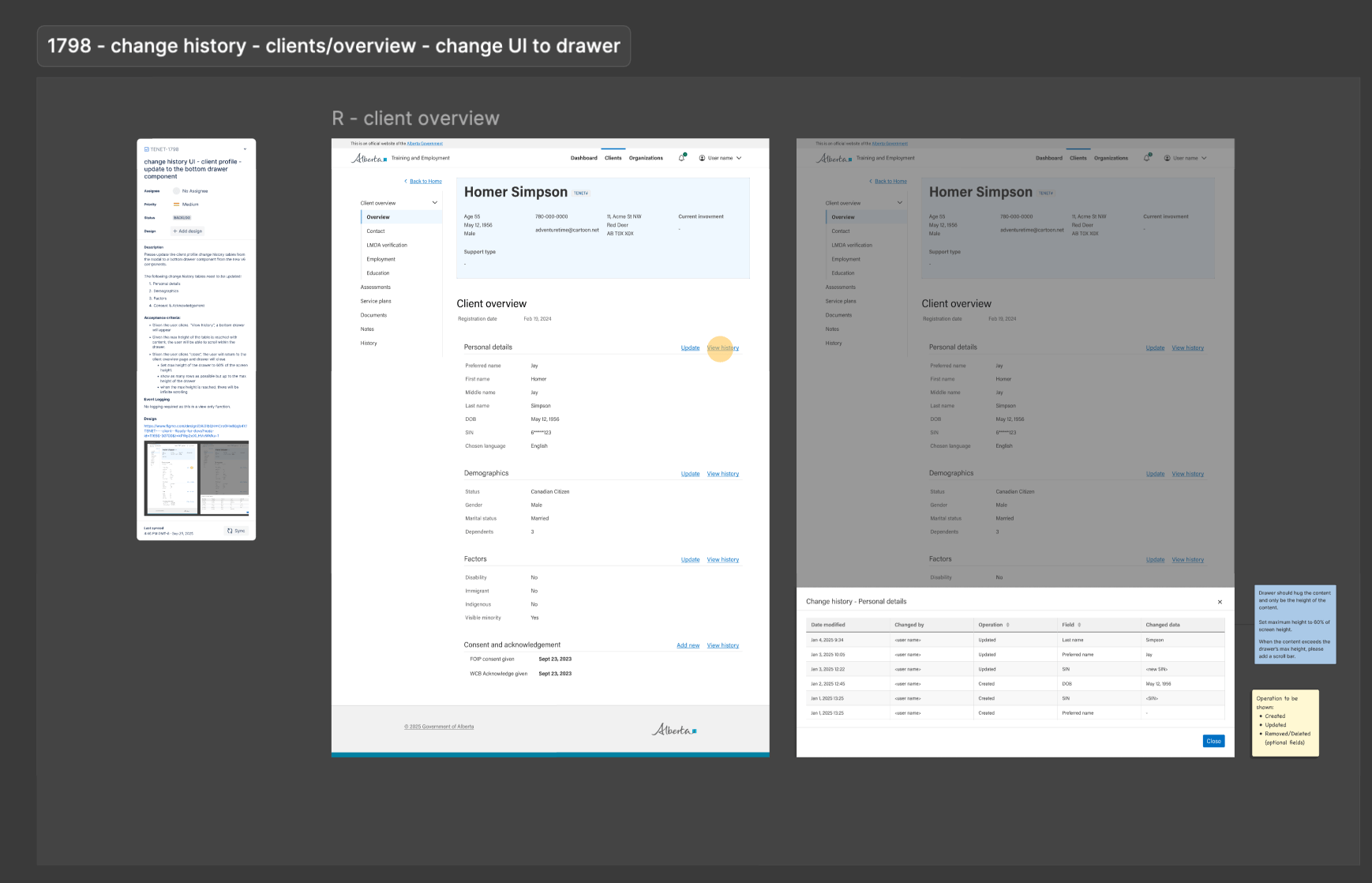
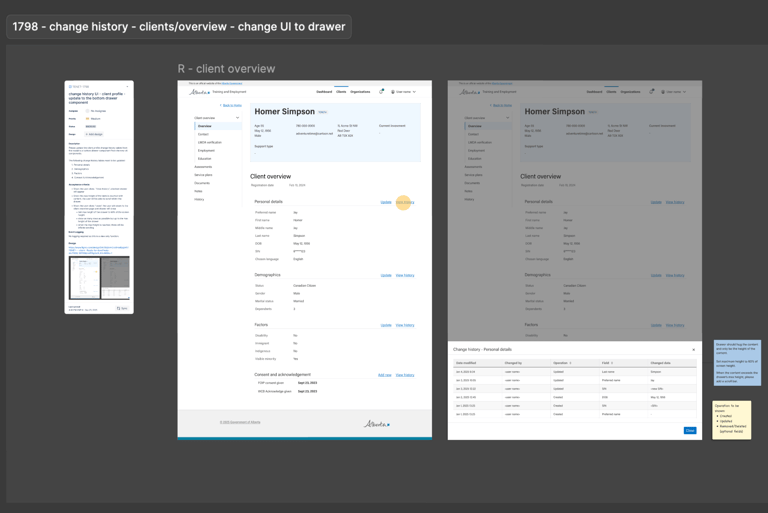
Each ticket belonged to a single Figma page. Our org did not support Figma's dev mode so I had to be very precise and organized for quick hand off.
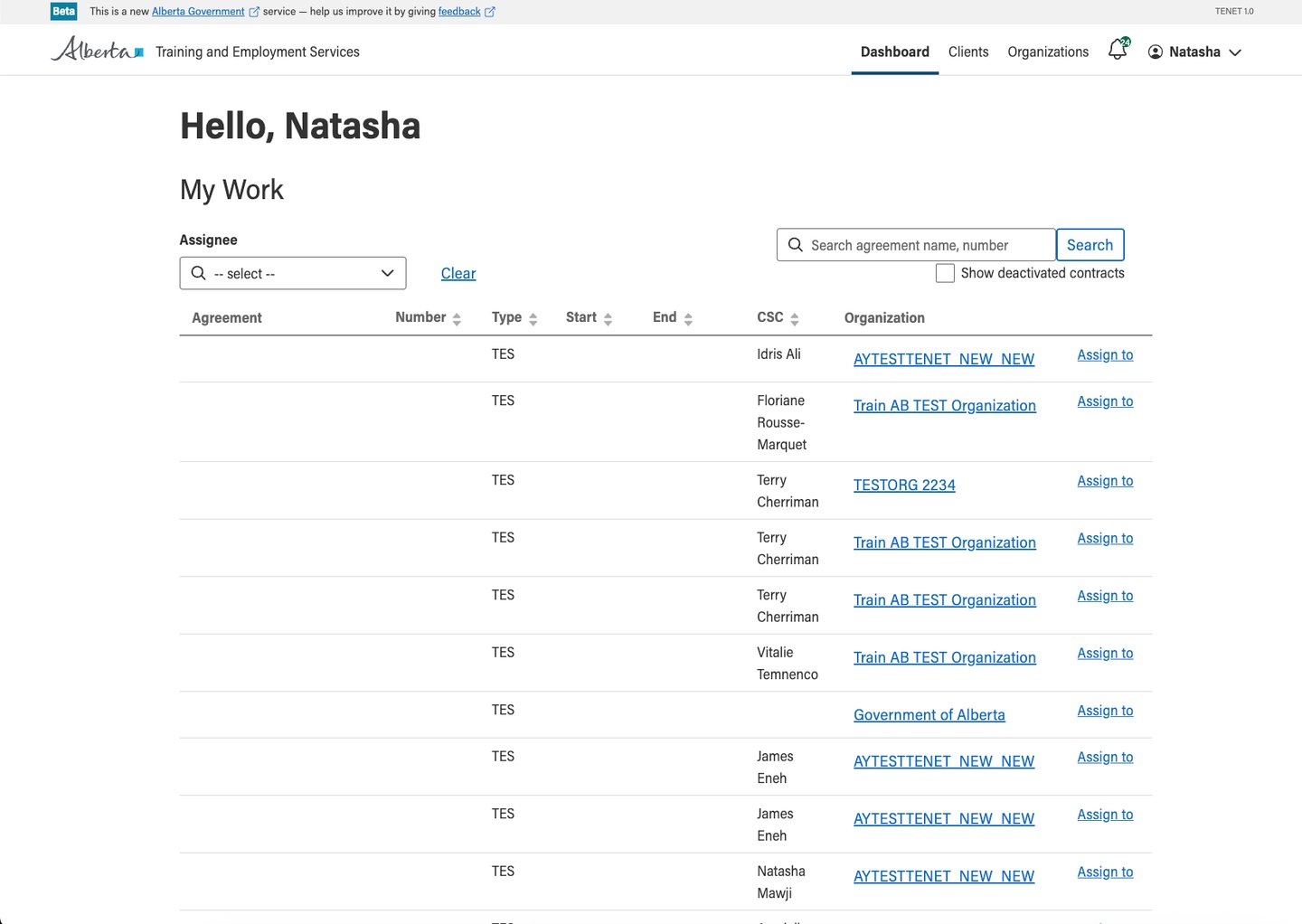
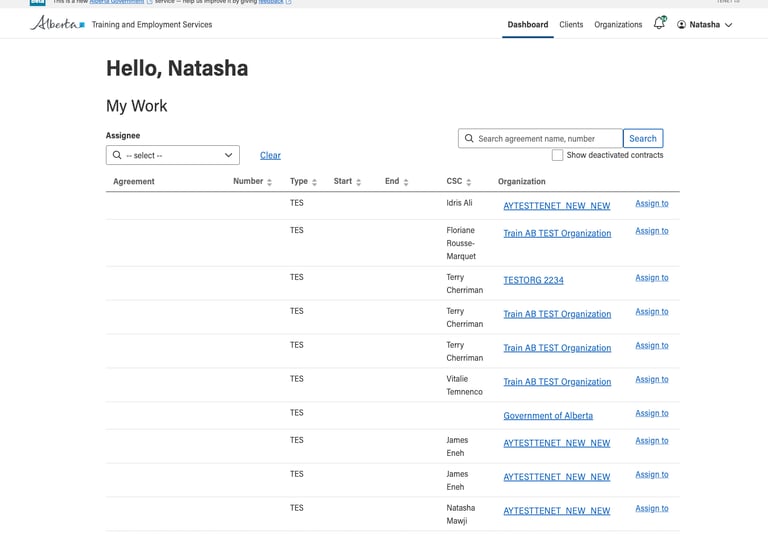
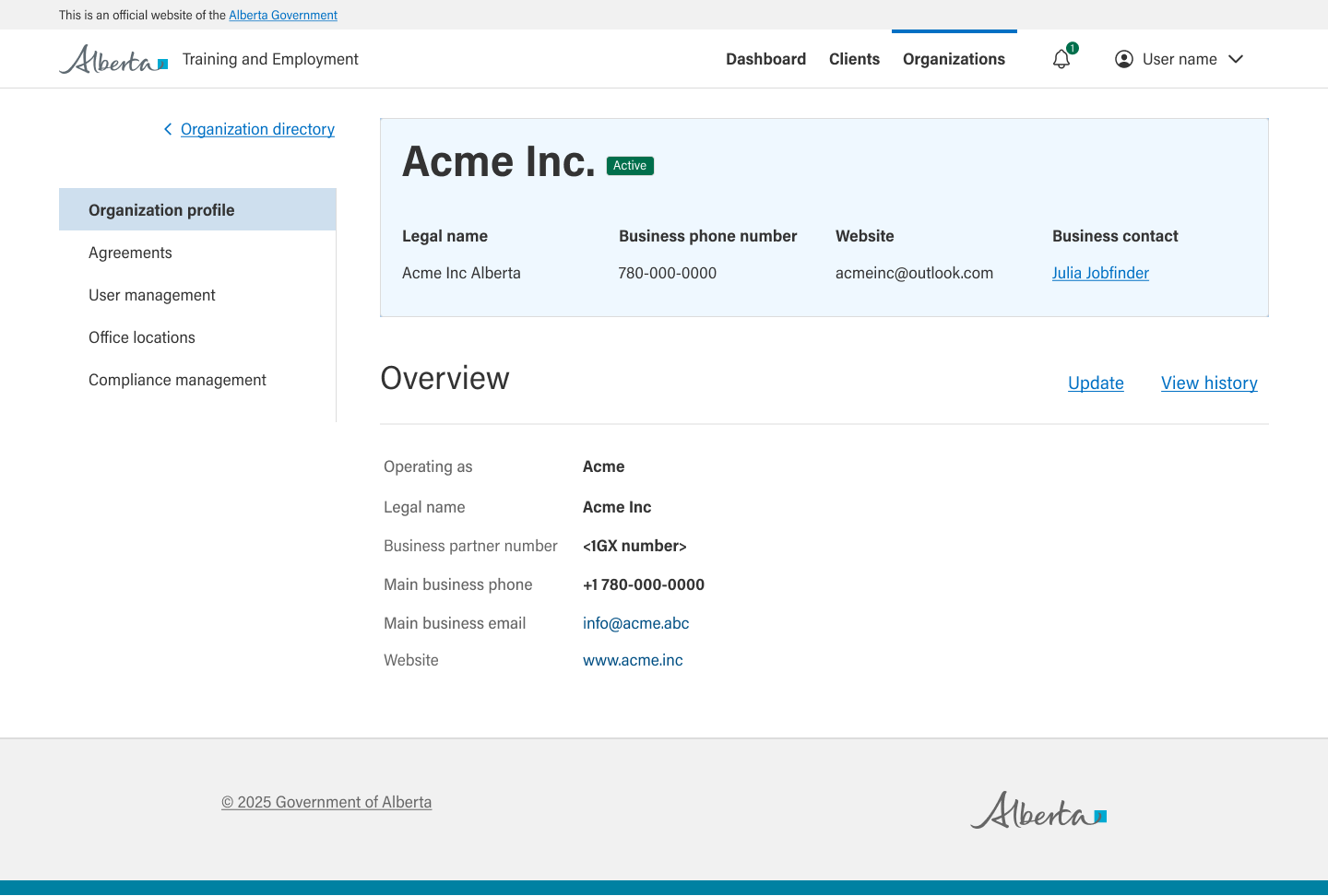
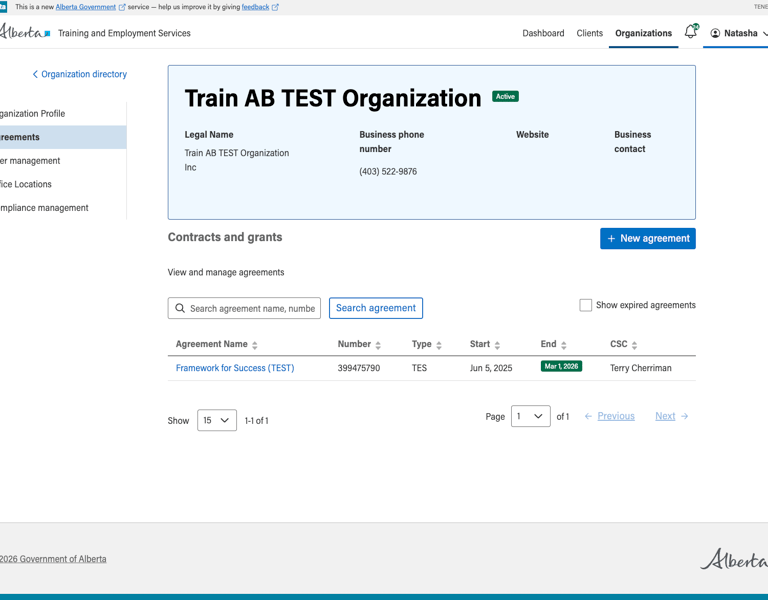
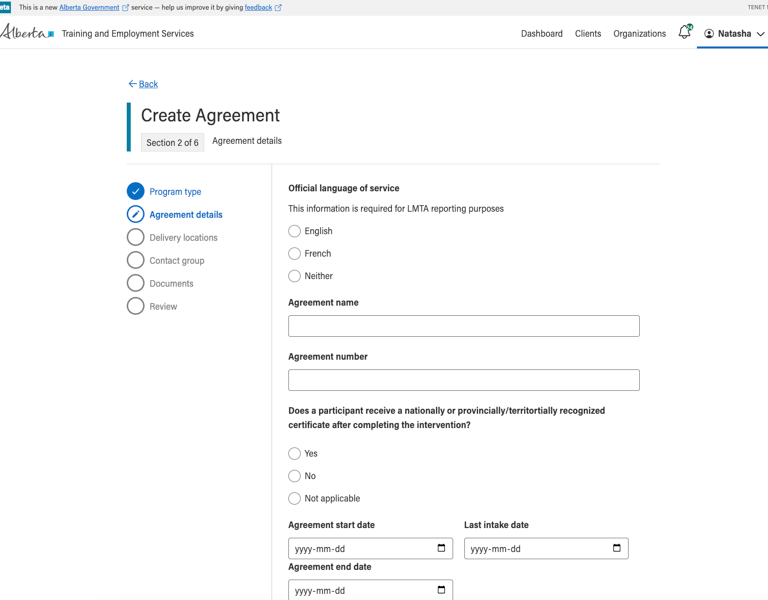
Final designs in UAT.
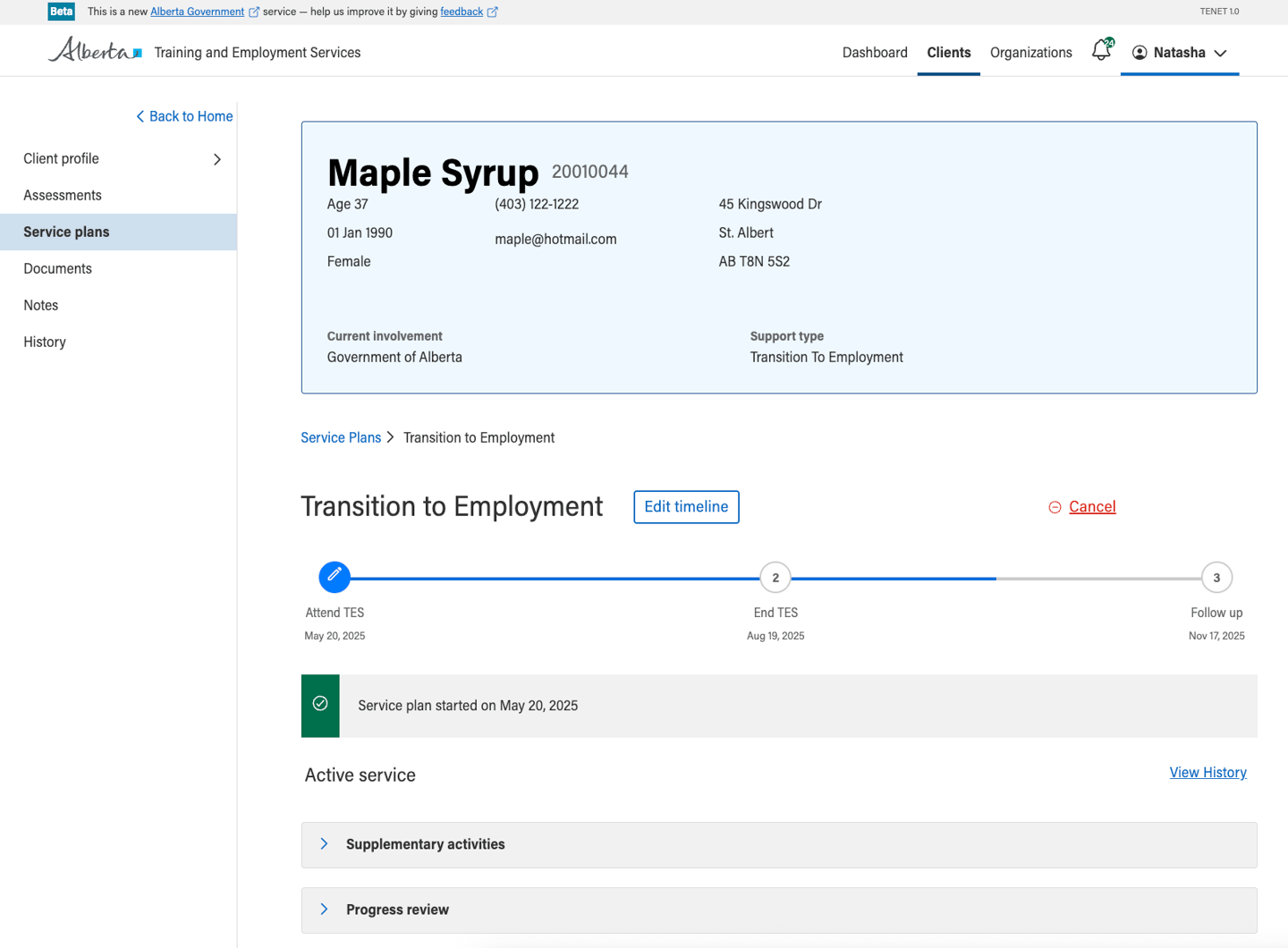
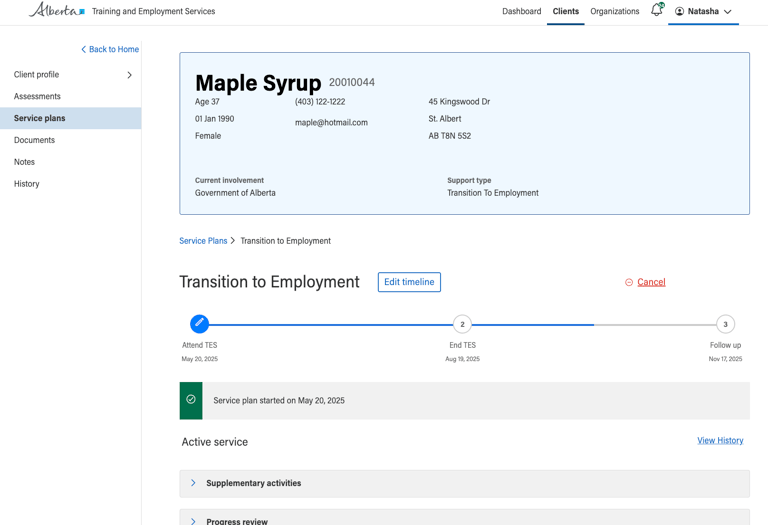
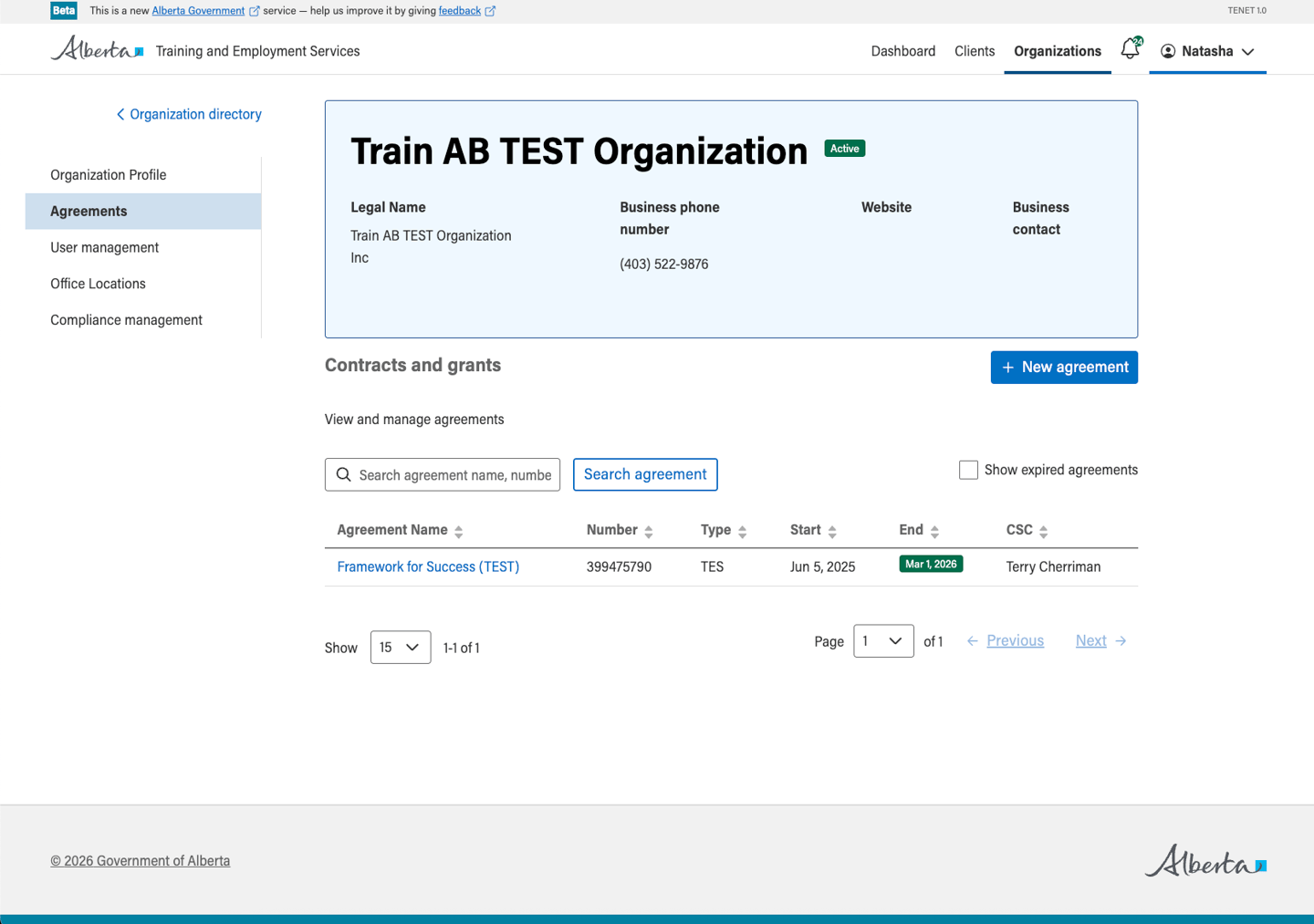
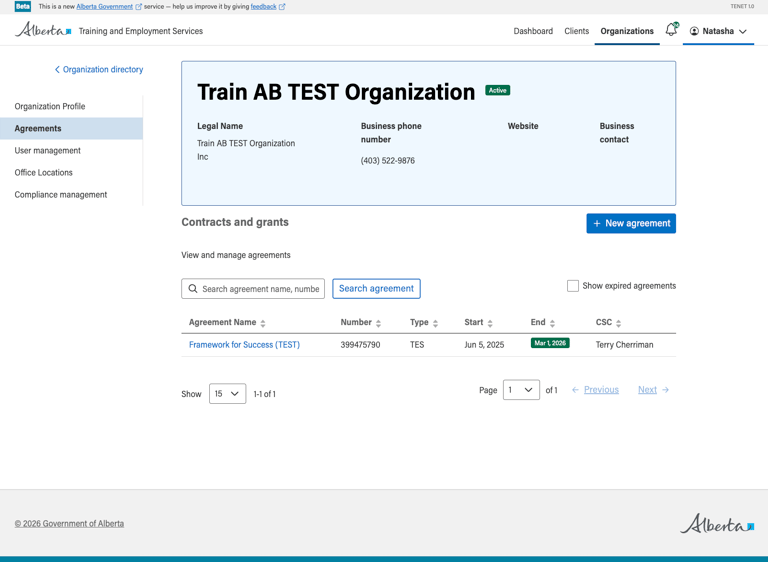
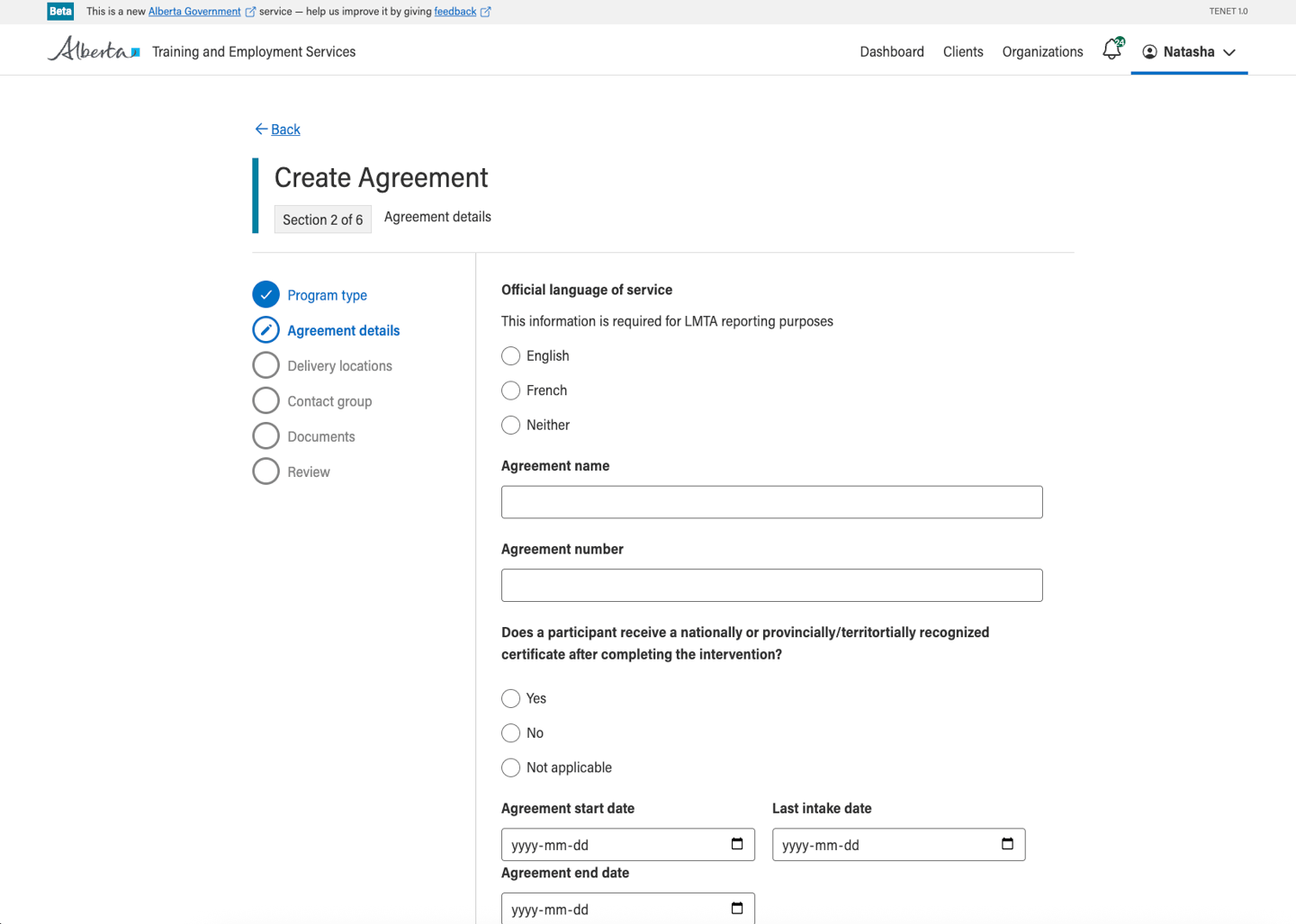
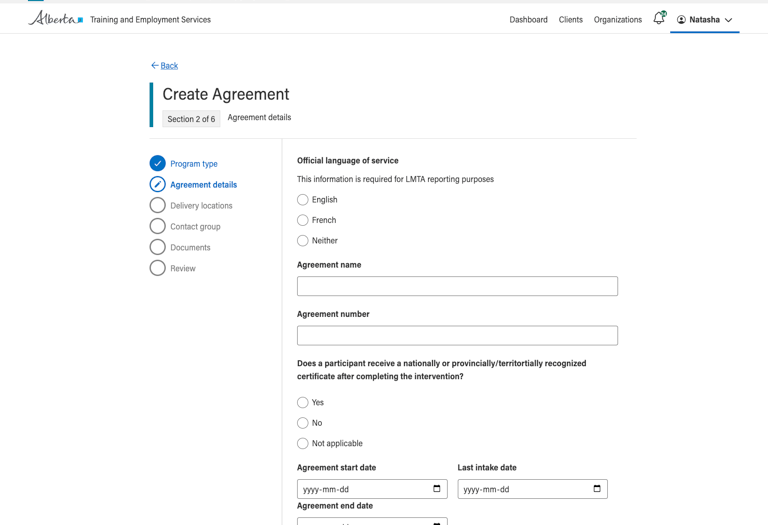
Dashboard
Wizard
Organization contracts
Program logging
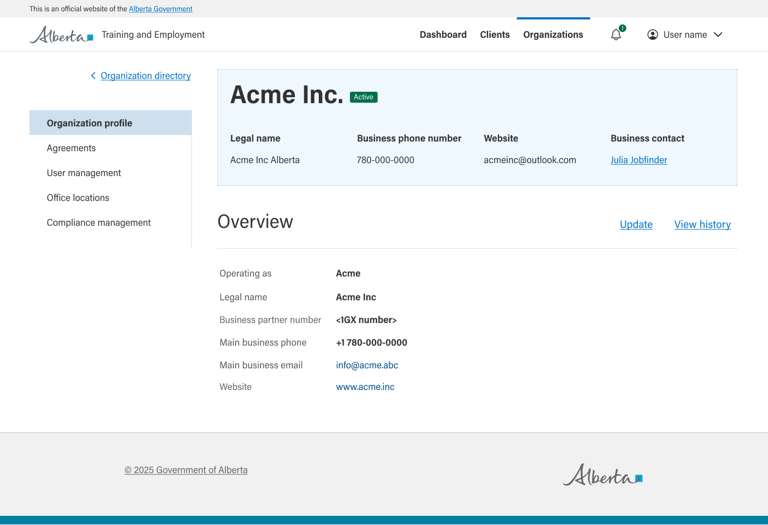
Originally designed by previous product designer; updated by me.
Going forward
TENET 1.0 (Training and Employment Network Enterprise Tracking) was designed as an in-house solution to simplify workflows for the 235 users, reduce operational risk, and give the government greater control over maintenance, scalability, and long-term costs. It caters to approx. 4500 participants/clients in programs annually.
Generally the software is estimated to reduce over 180 000 hours in annual delays/wait times for Albertans and over 10 000 hours of annual direct staff time.
It is currently in phase 2 beta, which is production development, design and beta releases.
Interested in more case studies?
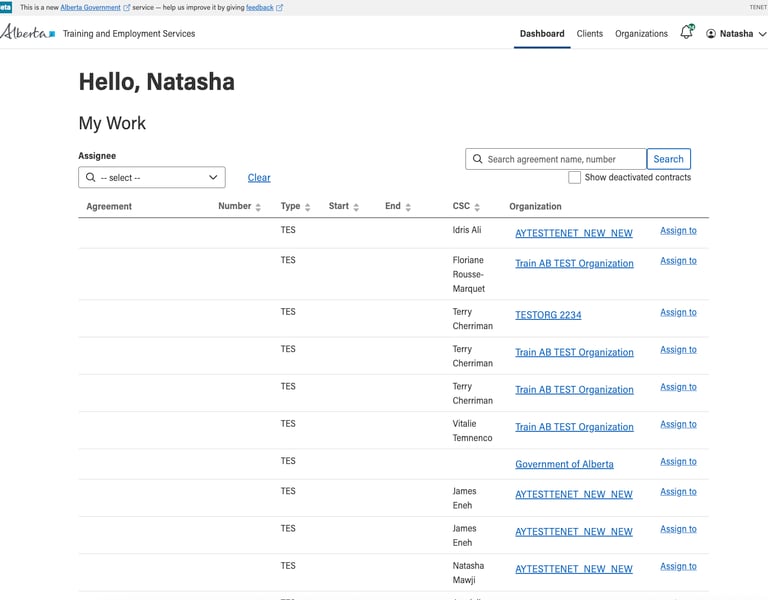
Final screens from UAT.
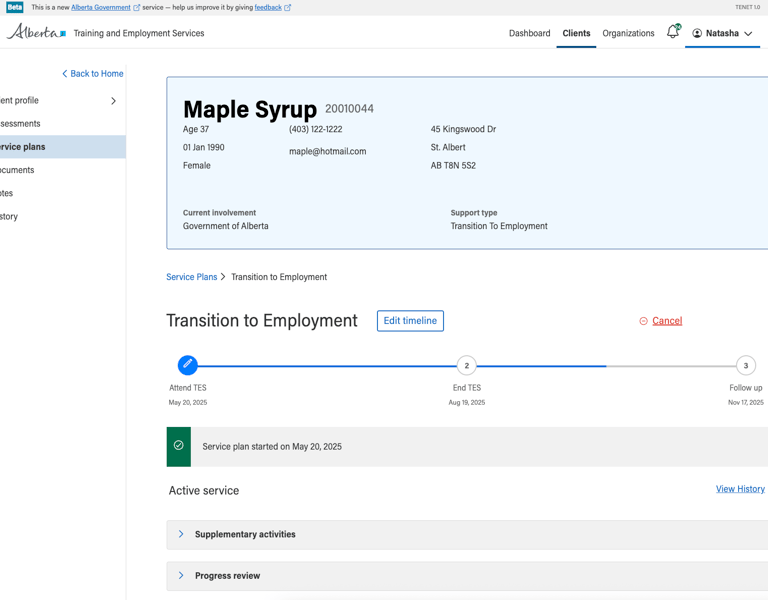
Dashboard
Wizard
Organization contracts
Program logging